
Animal Reiki as a Contemplative Practice: The Art and Science of the Let Animals Lead® Method

When people first discover Animal Reiki, one of the most common questions they ask is:
"Can Reiki heal my animal's medical condition?"
It's an understandable question. We love our animals deeply. When they are sick, injured, aging, or approaching the end of life, we naturally want to do everything we can to help.
After nearly three decades of practicing and teaching Animal Reiki, my answer has become both simpler and deeper.
Can Reiki support healing? In my experience, absolutely. I have witnessed remarkable moments of peace, comfort, connection, and transformation that continue to fill me with awe.
At the same time, no ethical Animal Reiki practitioner can promise a cure or predict a particular outcome. Every animal is unique, every situation is unique, and healing often unfolds in ways we never could have imagined.
Perhaps the better question is not, "Can Reiki fix this?" but rather, "What is Animal Reiki truly inviting us to become?"

For me, the answer begins with understanding Reiki as a contemplative practice.
The Let Animals Lead® method is rooted in traditional Japanese Reiki practices that cultivate mindfulness, compassion, and peaceful presence. Rather than trying to change an animal, we begin by transforming the quality of our own awareness.
Through simple practices such as Hara Breathing, the Reiki Precepts, mantras, and chanting, we learn to quiet the mind, soften our expectations, and meet animals with openness instead of agenda. If you're curious how these contemplative practices come together during an Animal Reiki session, you may also enjoy my article on the many ways Let Animals Lead® meditation deepens our connection with animals.
Interestingly, many of these practices are now being explored through the growing field of contemplative science. While science is still catching up to much of what practitioners have experienced for generations, it is beginning to shed light on why these ancient practices may be so beneficial for our well-being.
Alongside this emerging research, nearly three decades of sharing Reiki with animals and observing thousands of sessions has taught me something equally important: healing is often far more expansive—and far more mysterious—than curing alone.
Let's begin where every Animal Reiki session begins: with the breath.

Hara Breathing: Returning to Presence
The foundation of the Let Animals Lead® method begins with one of the simplest and most universal contemplative practices: the breath.
In Hara Breathing, we visualize each inhalation as pure, clear light entering through the crown of the head, filling the body, and settling into the hara—the energetic center located in the lower belly. With each exhalation, this light gently expands through the body, beyond the skin, and outward into the surrounding space.
Through this rhythmic practice, we begin to quiet the busy mind and reconnect with a deeper awareness of our true nature.
Across many contemplative traditions, the hara has long been regarded as the center of groundedness, courage, and "no-mind"—a place of calm presence beyond habitual thinking. While different traditions cultivate the hara in different ways, the intention is remarkably similar: to become more centered physically, emotionally, mentally, and spiritually.
Within the Let Animals Lead® method, Hara Breathing is where our Animal Reiki practice begins. Before we consider what an animal may need, we first bring gentle awareness to the quality of our own presence. How am I arriving in this moment? What energy am I bringing with me? By returning again and again to the breath, we cultivate mindfulness, steadiness, and a calmer, safer space in which animals are free to engage—or not engage—on their own terms.
Every contemplative practice begins with simplicity. For us, it begins with the breath. If you'd like to experience this practice yourself, try the guided practice below:
Contemplative Science Connection
Research across meditation, breathwork, and mindfulness has shown that slow, intentional breathing can support emotional regulation, reduce stress reactivity, strengthen attention, and activate the parasympathetic nervous system. These practices also enhance interoception—the ability to perceive internal bodily states—which is increasingly recognized as a foundation for self-awareness and compassionate presence.
While these studies are not specific to Animal Reiki, they help illuminate why breath-centered contemplative practices have been valued across cultures for centuries.
Another emerging area of contemplative science explores physiological co-regulation (or co-modulation): the ways humans and animals may influence one another's physiological and emotional states during interaction. While this research has not specifically examined Animal Reiki, it offers an intriguing perspective on why cultivating our own peaceful presence may be such an important part of supporting animals.
The Reiki Precepts: Instructions for Ethical Living
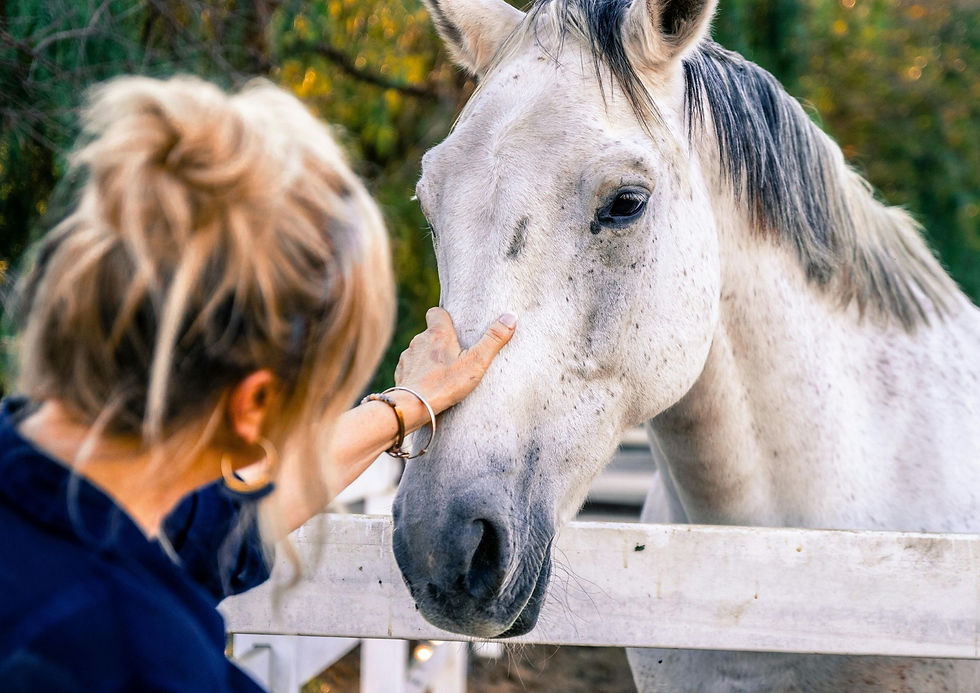
The Reiki Precepts are at the heart of the Let Animals Lead® method. More than inspiring words or ideals to strive toward, they are a contemplative practice—a way of continually returning to balance, compassion, and presence.
At their deepest level, the Precepts cultivate mindfulness. Before we can choose gratitude over worry or kindness over anger, we first have to notice what is happening within us. Simply becoming aware that we have been caught in worry, reacting in frustration, or forgetting gratitude is already the beginning of change.
Without this awareness, we move through life reacting automatically to circumstances rather than responding consciously. The Precepts invite us to pause, notice, and gently return again and again to a more balanced way of being.
There are many ways to practice with the Precepts. Through quiet self-reflection, whether in meditation or through journaling, we gently explore our inner landscape, becoming aware of the thoughts, emotions, and habitual patterns that may be disturbing our peace.
We can recite the Precepts during challenging moments to help us recenter ourselves. We can reflect on how animals so often embody these qualities with remarkable authenticity, allowing them to become our teachers.
And when our animals are struggling—perhaps through illness, fear, or behaviors that stir anger, worry, or frustration within us—the Precepts remind us to return to our own center.
This is one of the profound gifts of the Let Animals Lead® method: when an animal is out of balance, the invitation is not to become more anxious or try harder to fix the situation. Instead, the practice gently reminds us, they need you to be in balance if you want to help them.
The Reiki Precepts are ethical reminders of what living with energetic balance looks like in daily life:
Just for today:
Do not be angry.
Do not worry.
Be grateful.
Practice diligently.
Be kind to others.
We do not practice the Precepts because we expect to embody them perfectly or because we believe Reiki somehow removes all anger, worry, or fear from our lives. We practice them because each moment of awareness and each gentle return—to gratitude, to kindness, to steadiness—is another opportunity to cultivate the mindful, compassionate presence that animals so naturally recognize and are drawn to.

Contemplative Science Connection
Contemplative science increasingly recognizes that the moment of awareness itself is an important milestone in personal growth. Rather than expecting practitioners to eliminate difficult emotions, mindfulness research suggests that transformation begins by simply noticing thoughts and feelings as they arise.
This growing awareness allows us to respond with greater intention instead of reacting automatically, strengthening emotional regulation, resilience, self-compassion, gratitude, and compassion over time.
From this perspective, the Reiki Precepts are not ethical ideals to perfect, but a lifelong contemplative practice of noticing, returning, and gradually cultivating a more balanced and compassionate way of being.
As our inner landscape changes, so too can the quality of our relationships. Contemplative science is also beginning to explore how compassion-based meditation may influence how we relate to animals. Studies suggest that even brief contemplative practices can increase feelings of connection, solidarity, and compassion toward animals.
An expanding body of research is also examining compassion itself as a foundation for healthy human-animal relationships, highlighting the importance of empathy, ethical care, and recognizing animals as sentient beings.
While this research has not specifically examined Animal Reiki, it echoes an important insight of the Reiki Precepts: as we return again and again to compassion in our own hearts, our way of being with animals is naturally transformed.

Mantras: Returning the Mind to Peace
Mantras are another contemplative practice woven throughout the Let Animals Lead® method. More than words to repeat, they are gentle anchors that help return the mind to presence when it has become overwhelmed by fear, worry, or distraction.
From the very beginning of our Animal Reiki journey, we practice with the simple mantra, "All is well." Especially when sitting with a very sick, injured, or dying animal, this mantra gently shifts our awareness away from what appears to be "wrong." Rather than seeing the animal as broken or needing to be fixed, we are invited into a wider perspective—one that sees beyond a diagnosis to the animal's true nature: their inner light, their spirit, their essence.
In that deeper space, all is indeed well. It is a space of connection with something greater than ourselves, where we remember the wholeness that exists beyond the circumstances of the moment.
As students continue their Reiki training, they are also introduced to the traditional Reiki mantras, each of which invites contemplation of deeper qualities such as focus, harmony, and Oneness. Rather than using these mantras as magical formulas, we practice them as contemplative tools that gently guide the mind back to presence.
Mantras are sometimes described as forms of "protection," but in the Let Animals Lead® method we understand this differently. Their purpose is not to protect us from outside forces, but to help protect us from our own habits of worry and fear. Each repetition becomes an opportunity to pause, return to center, and cultivate the calm, grounded presence that allows us to be a steady source of calm and safety for the animals who choose to share space with us.
Contemplative Science Connection
Mantra repetition has become an area of increasing interest within contemplative science. Research describes mantra-based meditation as a form of focused attention meditation that can help redirect attention away from habitual or intrusive thought patterns and back to the present moment. Systematic reviews suggest that regular mantra practice may support reductions in stress, anxiety, and other forms of emotional distress, while strengthening the capacity to return to a calmer, more centered state.

Chanting: Entering the Quiet of Sound
In the Let Animals Lead® method, chanting is our form of contemplative sound practice. Rather than using sound to do something to an animal, we use our own voice as a contemplative tool to quiet the mind and deepen our presence.
During chanting, we slowly inhale into the hara and then gently vocalize the Reiki mantras—or the vowel sounds of the mantras—through the entire exhalation. As the breath and sound become one, our attention naturally shifts away from thinking and toward the direct experience of vibration. The mind gradually settles, creating a spacious inner stillness that is often difficult to access through thought alone.
As with every practice in the Let Animals Lead® method, chanting is guided by the animal. We remain attentive to the animals around us, adjusting our volume, tone, pace, or choosing silence altogether if that is what best supports their comfort. Our intention is never to direct sound toward an animal, but to cultivate a peaceful state of being that animals are always free to approach—or not approach—in their own way.
As chanting steadies the breath and settles the mind, it creates an atmosphere of calm that many practitioners find supports deeper moments of peace with animals. Through chanting, we discover that sometimes the deepest silence is found not in the absence of sound, but within it, opening the door to a deeper, healing presence with animals.
Contemplative Science Connection
Contemplative science is beginning to explore the unique effects of chanting as a form of focused attention meditation. Emerging research suggests that rhythmic vocalization, synchronized with the breath, may strengthen attention while supporting emotional regulation and helping quiet habitual self-focused thinking.
Although this field is still developing, these findings offer an intriguing scientific parallel to the traditional understanding of chanting as a practice that helps us let go of mental distraction and return to a calmer, more peaceful state. They also remind us that sound is a fundamental part of life itself, shaping communication and relationships throughout the animal kingdom.

What Thousands of Hours with Animals Have Taught Me
While scientific research helps us understand certain aspects of Reiki, it is only one way of knowing. Another comes through careful observation.
Over nearly three decades of practicing and teaching Animal Reiki, I have been blessed to witness thousands upon thousands of hours of Reiki shared with animals in homes, shelters, farms, sanctuaries, veterinary clinics, and wildlife settings.
Over the years, I have seen experiences that continue to fill me with wonder. These observations are not scientific proof, nor should they be mistaken for guarantees. Every animal is unique, and every Reiki session unfolds in its own way. Yet after so many years, the patterns are impossible for me to ignore.
I have watched frightened shelter dogs, surrounded by barking and chaos, gradually soften into such a deep state of relaxation that they drifted peacefully to sleep. I have seen animals recovering from surgery gently place an injured part of their body into my hands before settling into what I lovingly call a "Reiki nap." I have seen elderly animals who seemed withdrawn suddenly find the energy to pick up a favorite toy or ask their family to play.
I have sat quietly with animals nearing the end of life and watched discomfort melt into peace, allowing them to pass with remarkable grace. I have witnessed animals living in conflict begin relating to one another with greater harmony after a Reiki session. I have seen a frightened horse refuse to step into a trailer for nearly an hour, then, after just a few minutes of Reiki, take one deep breath and calmly walk inside.
I have even sat beside a large koi pond, offering Reiki in silence, only to have the fish swim from the far side of the pond to gather around me, splashing the water with their tails as if to say, "We see you."
Some of the most surprising experiences have happened in animal shelters. Time and again, I have offered Reiki to animals who had waited weeks or months for a home, only to learn that they were adopted shortly (sometimes within hours) afterward.
Over the years, many of my students have shared similar experiences. Of course, I cannot say without a doubt that Reiki caused those adoptions. But I have learned not to dismiss these moments simply because I cannot explain them, because there are so many of them.
Does Reiki always lead to these kinds of experiences? No. Sometimes an animal recovers. Sometimes an animal dies. Sometimes the outward circumstances do not change at all. But again and again, I have witnessed something shift.
A frightened animal relaxes.
A painful moment becomes more peaceful.
A relationship softens.
A caregiver finds acceptance.
Love seems easier to receive and easier to give.
Perhaps this is one of the greatest lessons the animals have taught me: healing is not always the same as curing. When we let go of trying to fix, control, or predict what should happen, we create space for something deeper to unfold. Sometimes healing appears as physical recovery. Sometimes it appears as emotional peace, renewed trust, reconciliation, comfort, or a peaceful transition at the end of life.
Healing takes many forms, and often it surprises us.
For me, this is where the heart of Reiki lives. My role is not to decide what healing should look like. My role is simply to show up with a quiet mind, an open heart, and compassionate presence, trusting the wisdom of the animal and allowing the natural harmony of the healing journey to unfold in whatever way it is needed.
These experiences naturally invite deeper questions. What can science help us understand about Reiki? What remains a mystery? And how can we continue exploring these questions while honoring the agency, dignity, and choices of the animals themselves?

What Does Reiki Research Tell Us?
Over the past few decades, researchers have conducted hundreds of studies exploring Reiki in healthcare settings. While the quality of these studies varies, several systematic reviews suggest that Reiki may help reduce stress, anxiety, pain, and support overall well-being in some people.
At the same time, researchers consistently conclude that more high-quality studies are needed before firm conclusions can be drawn. For more details about 13 peer-reviewed scientific studies of Reiki from 1998-2016, read “Reiki Is Better Than Placebo and Has Broad Potential as a Complementary Health Therapy”.
This is not unusual. Many contemplative practices—including mindfulness, meditation, and breathwork—were practiced for centuries before modern science developed the tools to begin studying their effects. Reiki research is still a relatively young field, and our understanding continues to evolve.
As an Animal Reiki practitioner, I find this both encouraging and humbling. Encouraging because science is beginning to explore experiences that many practitioners have quietly observed for years. Humbling because research reminds us to remain curious, avoid making claims we cannot support, and continue asking thoughtful questions.
For me, the purpose of Reiki has never been to replace veterinary care or promise miraculous cures. Rather, it is to cultivate the conditions in which peace, connection, compassion, and healing may naturally unfold. Sometimes that healing includes physical improvement. Sometimes it does not.
But even when an illness remains, I have witnessed how a calmer mind, a more peaceful heart, and a loving presence can profoundly change an animal's experience—and often the experience of the people who love them as well.
Perhaps the greatest contribution of Reiki research is not that it answers every question, but that it encourages us to keep exploring with both an open mind and an open heart.

Looking Ahead: The Future of Animal Reiki Research
While research on Reiki in humans continues to grow, research specifically exploring Animal Reiki is still in its early stages. I believe this presents an exciting opportunity—not only to study whether Reiki may benefit animals, but also to ask new kinds of questions that reflect a more compassionate, animal-centered approach.
Traditional research often focuses on measurable outcomes such as changes in pain, stress, or physical health. These are important questions. But my experience with the Let Animals Lead® method suggests there may be much more to explore.
What happens when animals are given complete freedom to choose whether or not they wish to participate in a Reiki session? How might their behavior, relationships, or sense of well-being change when they are approached without expectation or restraint?
What effect does a regular contemplative practice have on the people who share their lives with animals? Does cultivating peaceful presence influence the human-animal bond in measurable ways? How might this practice support shelter staff, veterinary professionals, wildlife caregivers, and others who dedicate their lives to helping animals?
These are questions that deeply interest me because they recognize animals as active participants in the healing journey rather than passive recipients of care.
I also believe Animal Reiki research should continue to honor the dignity and agency of the animals themselves. The Let Animals Lead® method is built on choice, respect, and compassionate presence. There is never a justification for causing harm to animals in order to study practices intended to support their well-being.
Future Animal Reiki research can—and should—reflect these same values by allowing animals to decide how, when, and whether they wish to engage. One encouraging example is the ethical Animal Reiki research conducted by Dr. Barbieri. You can read about her latest blinded, placebo-controlled, randomized clinical trial.
The contemplative traditions teach us that not everything that matters can be easily measured. At the same time, science offers valuable tools for deepening our understanding. Rather than seeing these perspectives as separate, I believe they complement one another. Together they invite us to remain curious, to ask better questions, and to continue learning from the greatest teachers of all—the animals themselves.

So...Will Animal Reiki Fix My Animal's Medical Issues?
If you've read this far, you probably already know my answer.
No ethical Animal Reiki practitioner can promise that Reiki will cure an illness or change the course of a medical condition. Every animal's journey is unique, and healing unfolds in its own time and in its own way.
What Animal Reiki offers me, every single day, is something both simpler and, in my experience, far more profound: a contemplative practice rooted in compassionate presence. Rather than trying to fix an animal, we learn to quiet our minds, soften our expectations, and meet each moment with openness, respect, and trust.
Sometimes healing appears as physical recovery. Sometimes it appears as comfort, renewed trust, acceptance, or peace. Sometimes the greatest transformation happens within us as we learn to simply be present with the animals we love.
After nearly three decades of practicing Animal Reiki, I continue to be inspired by what the animals have taught me. They have shown me that healing is bigger than curing, that presence can be more powerful than doing, and that compassion itself can become a path of transformation—for animals and for ourselves.
The contemplative traditions are ancient. Our understanding of them continues to evolve. Each moment of mindful practice, each encounter with an animal, each new scientific discovery, and each shared insight within our community deepens our appreciation for what it means to be peacefully present.
The Let Animals Lead® method is rooted in timeless contemplative practices, yet it remains a living tradition—one that continues to grow through curiosity, humility, and the quiet wisdom of the animals themselves.
Perhaps that is the true nature of any contemplative practice—not that we arrive at all the answers, but that we remain open to learning, one peaceful moment at a time.


If we can choose if we should receive reiki, why can't animals choose? This month's blog was very inspiring.